
Company
The weight, fire behaviour and salt resistance behind every piece
Yacht interior materials decide how a piece behaves at sea before they decide how it looks. Modenese Gastone records the structural build, the fire rating, the resistance to humidity and salt, and the fixing method for each surface, so an owner or shipyard approves the scheme with the measures in front of them.
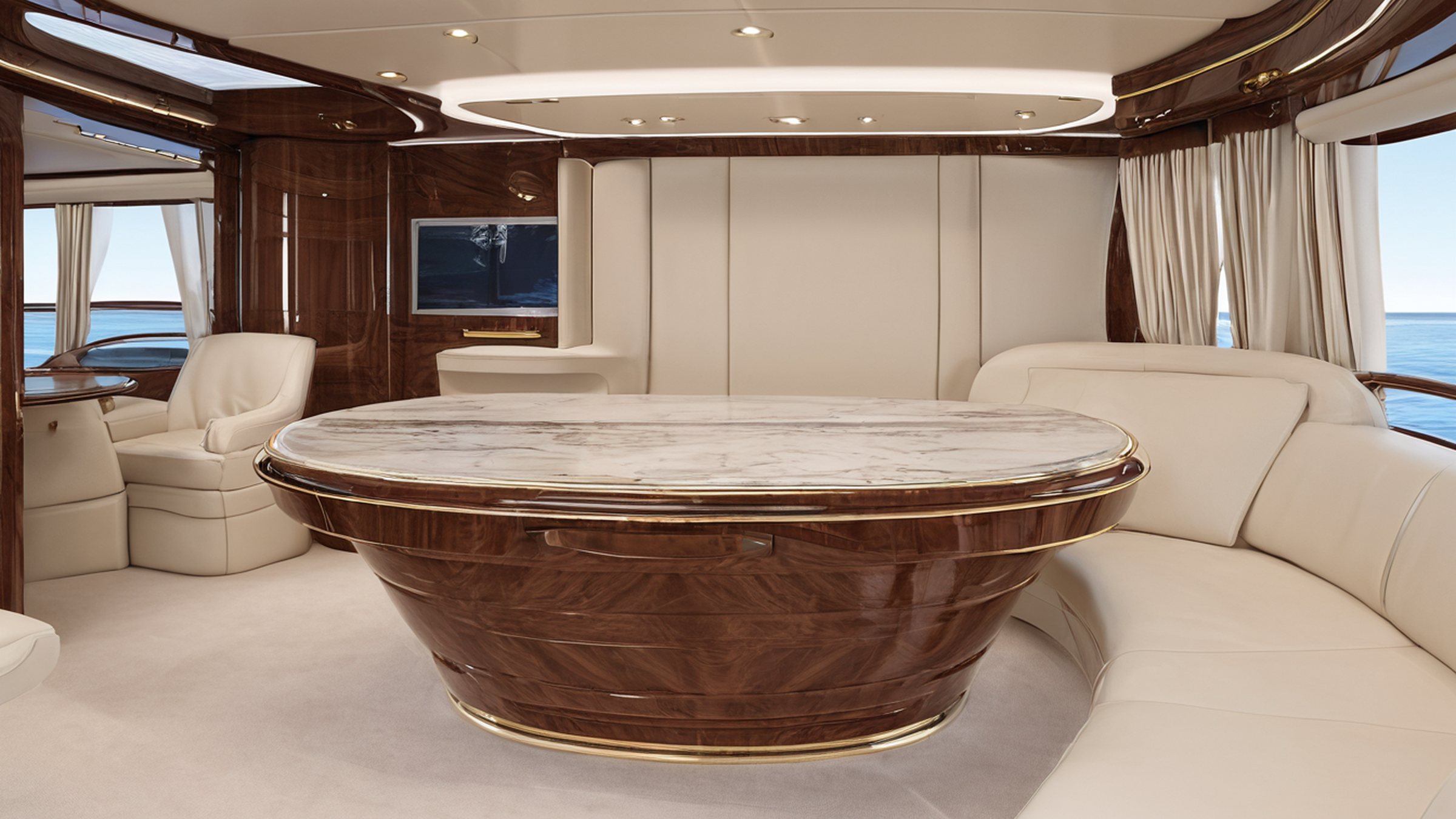
Which materials make up a Modenese Gastone yacht interior?
Yacht interior materials at Modenese Gastone are chosen first for weight and fire behaviour, then for how they hold up to humidity and salt air. Structure uses lightweight solid-wood frames over veneered composite cores; surfaces run from sealed lacquer and 24k gold leaf to reduced-weight stone tops and marine-grade upholstery.
Structure comes first because weight affects stability and range. Frames are cut from lightweight solid wood and paired with veneered composite cores, so a piece keeps the strength for carving while shedding the mass of solid timber. Every joint uses concealed marine fixings rated for the movement of a hull.
Surface and decoration follow, each treated for the cabin. Lacquer, painting and 24k gold leaf are sealed against humidity and salt air; stone tops are reduced in thickness or backed to cut weight; upholstery is specified fire-retardant to MED or SOLAS where the layout requires. The build is reviewed against standards such as RINA, Lloyd's Register and MED Wheelmark, and the finished scheme carries through the main saloon and owner's suite.
How does each material perform for weight, fire and salt?
Each material in a Modenese Gastone yacht interior is recorded against weight, fire rating, resistance to humidity and salt, and the way it is fixed. The values below are qualitative rather than fixed numbers, since the exact rating depends on the layout, the finish schedule and the class rules the vessel is reviewed against.
| Material | Weight per unit | Fire rating | Humidity / salt resistance | Fixing method |
|---|---|---|---|---|
| Lightweight solid-wood frame | Lower than solid timber | Reviewed against MED or SOLAS where specified | Sealed against humidity and salt air | Concealed marine fixings |
| Veneered composite core panel | Lighter than an equivalent solid panel | Fire-retardant build where the layout requires | Moisture-stable core with sealed edges | Bonded and mechanically fixed |
| 24k gold-leaf detailing | Negligible added weight | Applied over a treated, sealed ground | Sealed under a protective coat | Laid on carved relief |
| Marine-grade upholstery | By fabric schedule | Fire-retardant to MED or SOLAS where specified | Treated for damp and salt exposure | Upholstered over shaped padding |
| Stone and marble tops | Reduced thickness or backed to cut weight | Non-combustible surface | Sealed against moisture | Set into a shock-tolerant frame |
| Lacquer and hand finish | No structural weight | Over a treated, sealed ground | Formulated for humidity and salt air | Bonded to prepared timber |
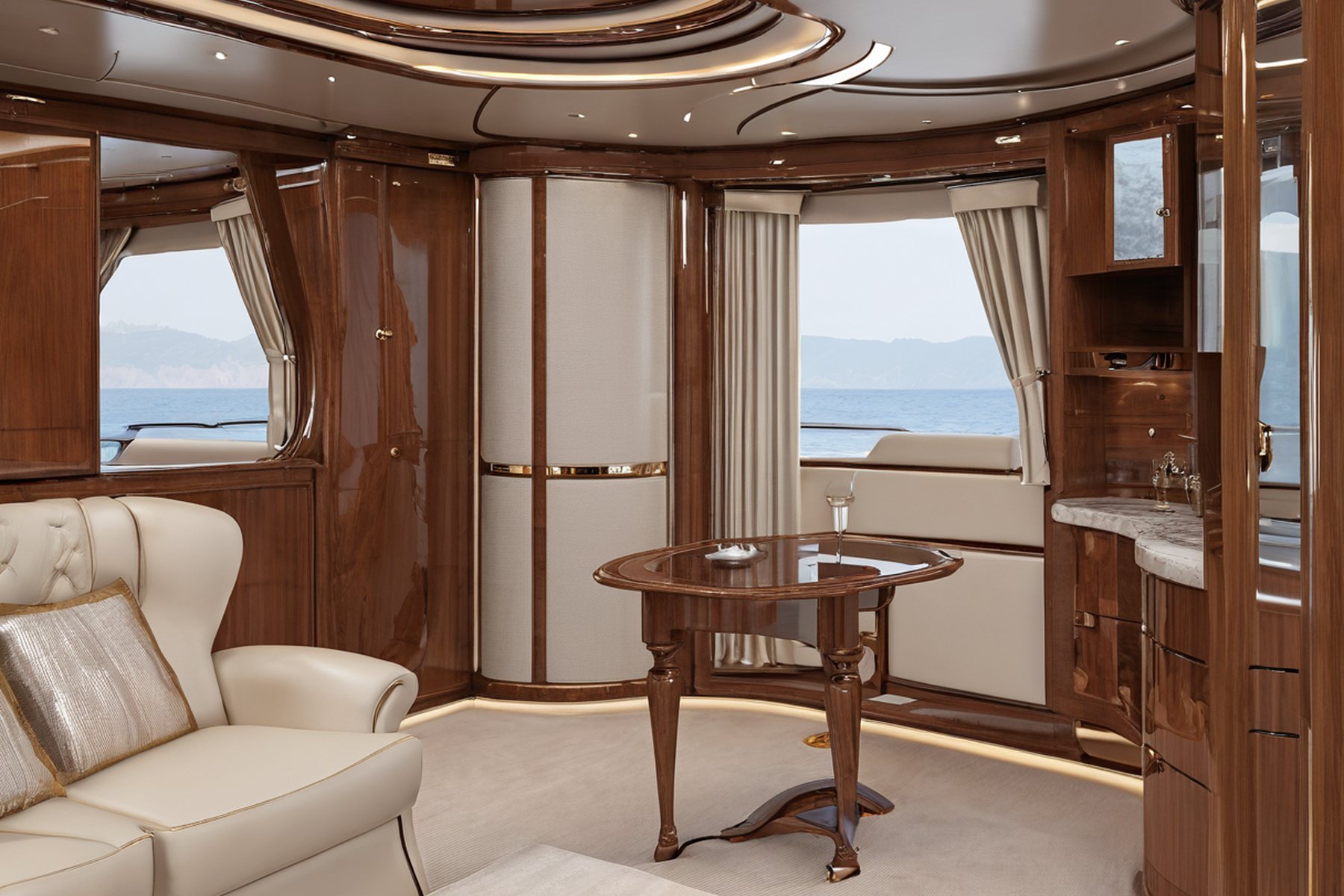
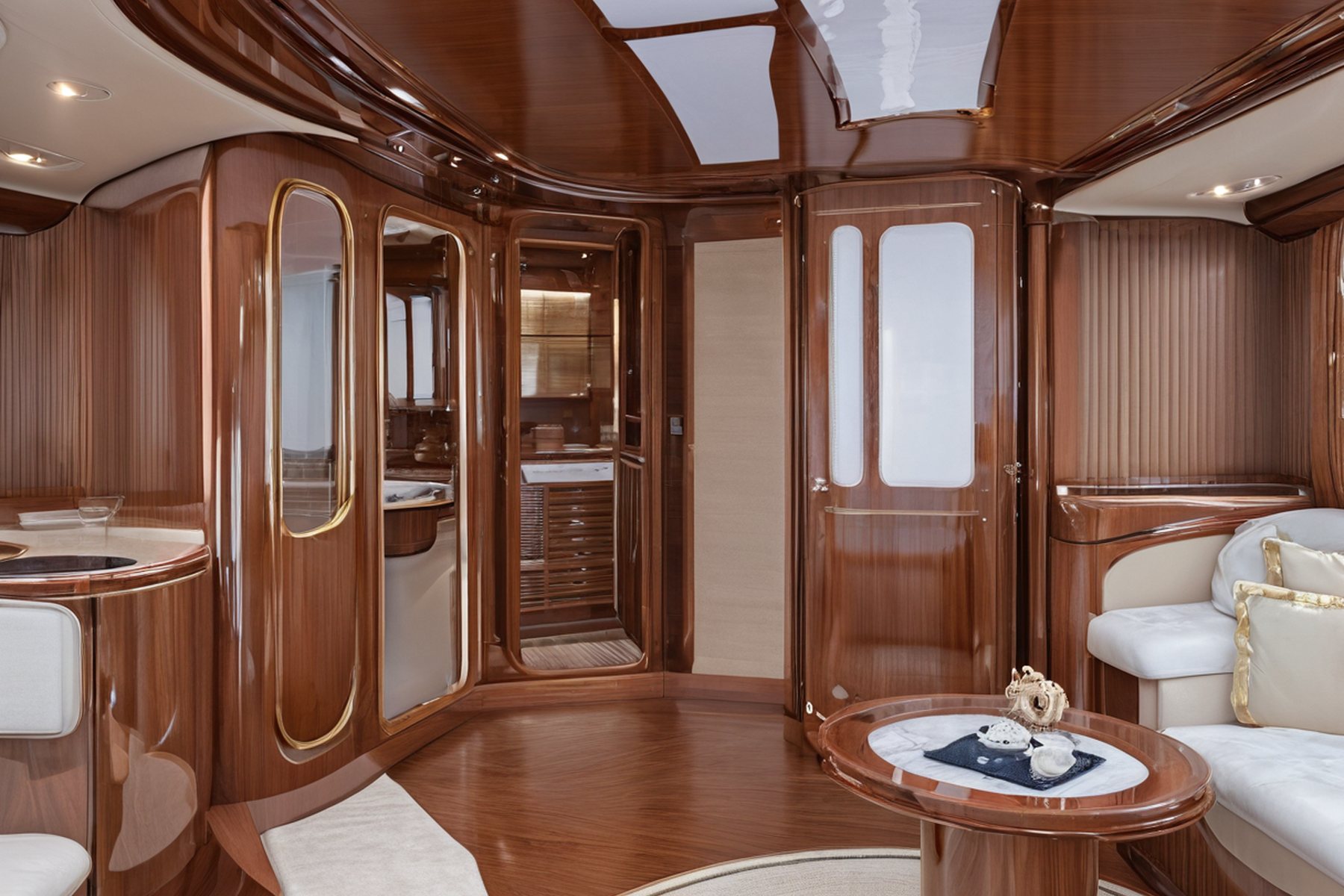
Yacht interior materials: lightweight frames, sealed finishes and stone
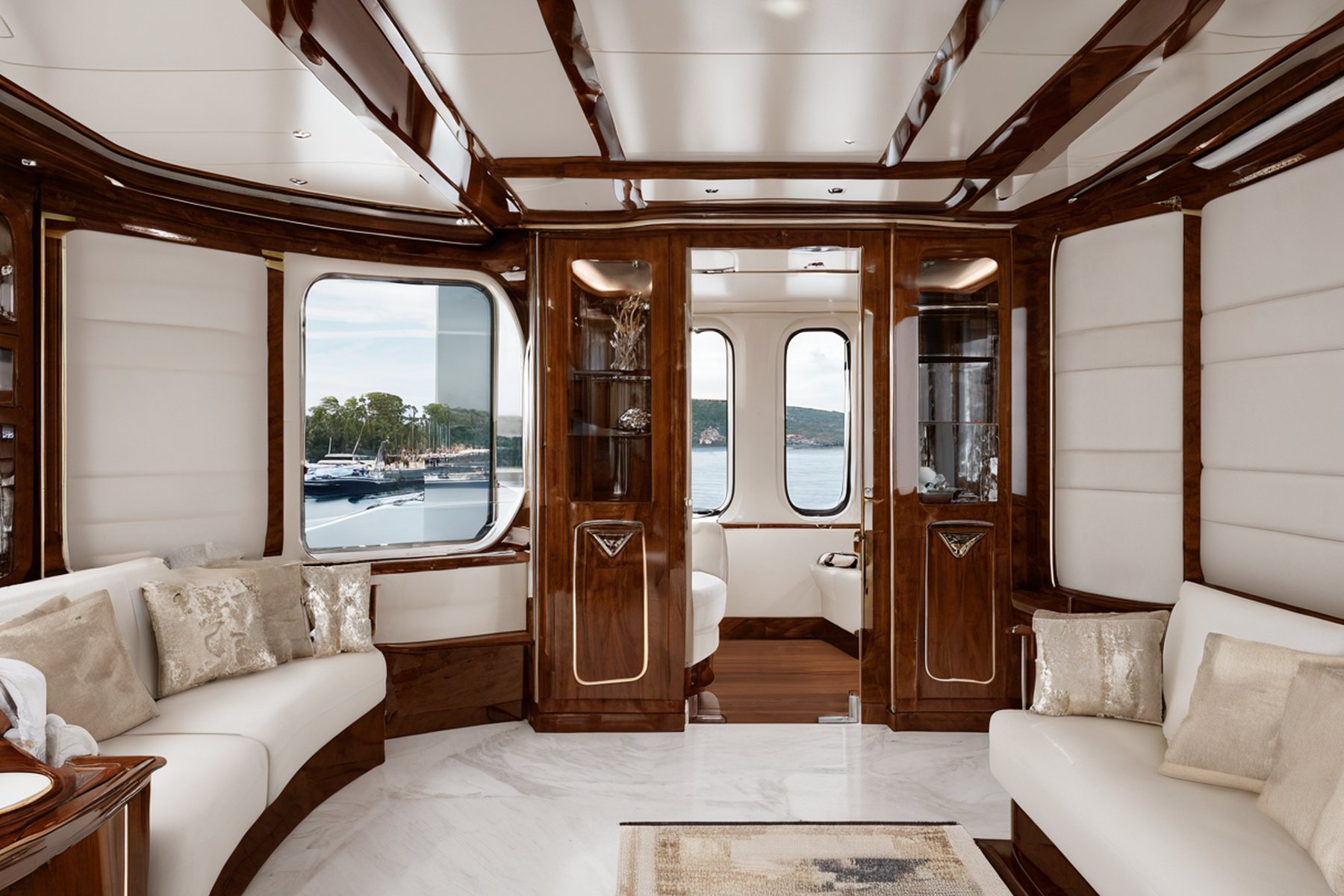
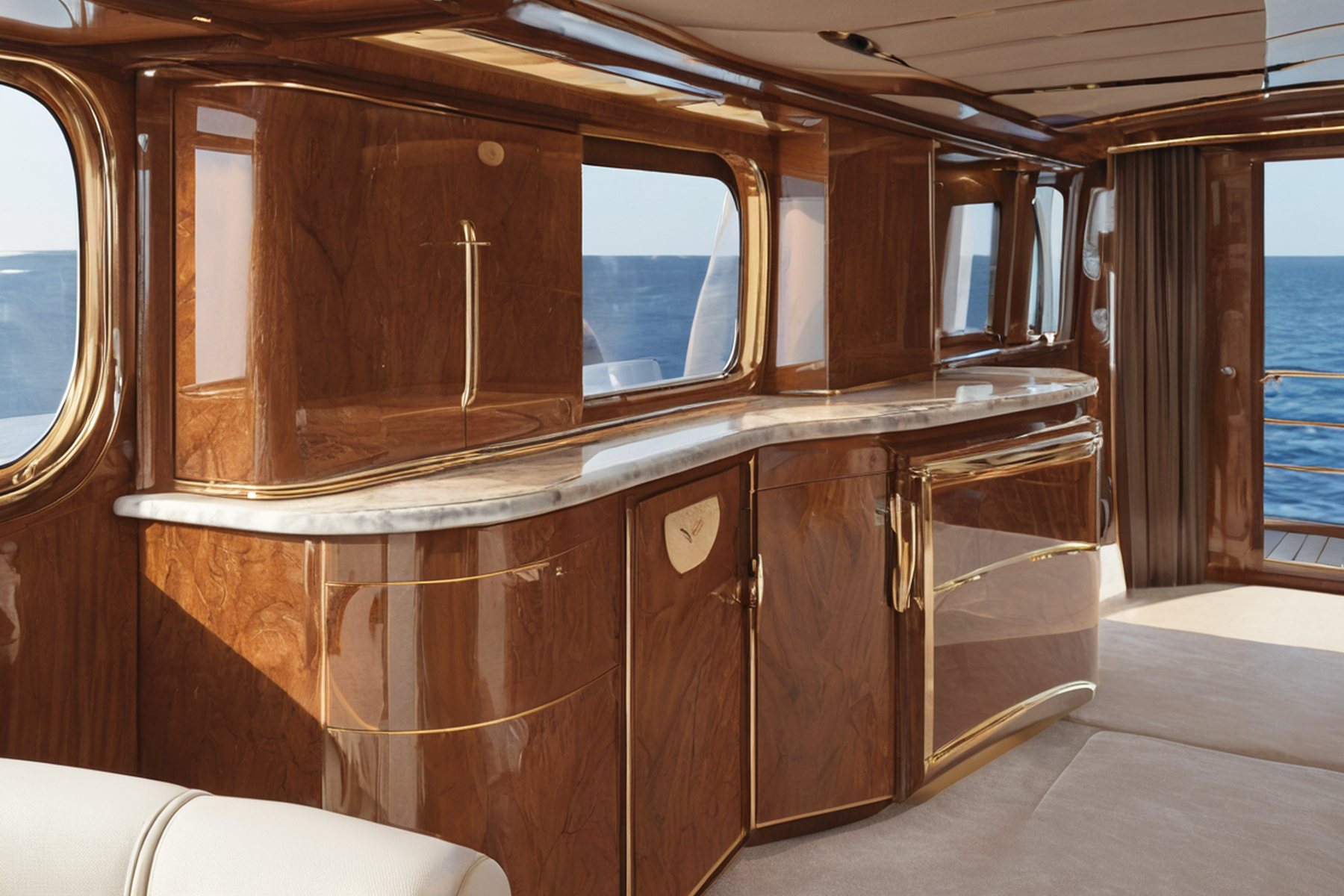
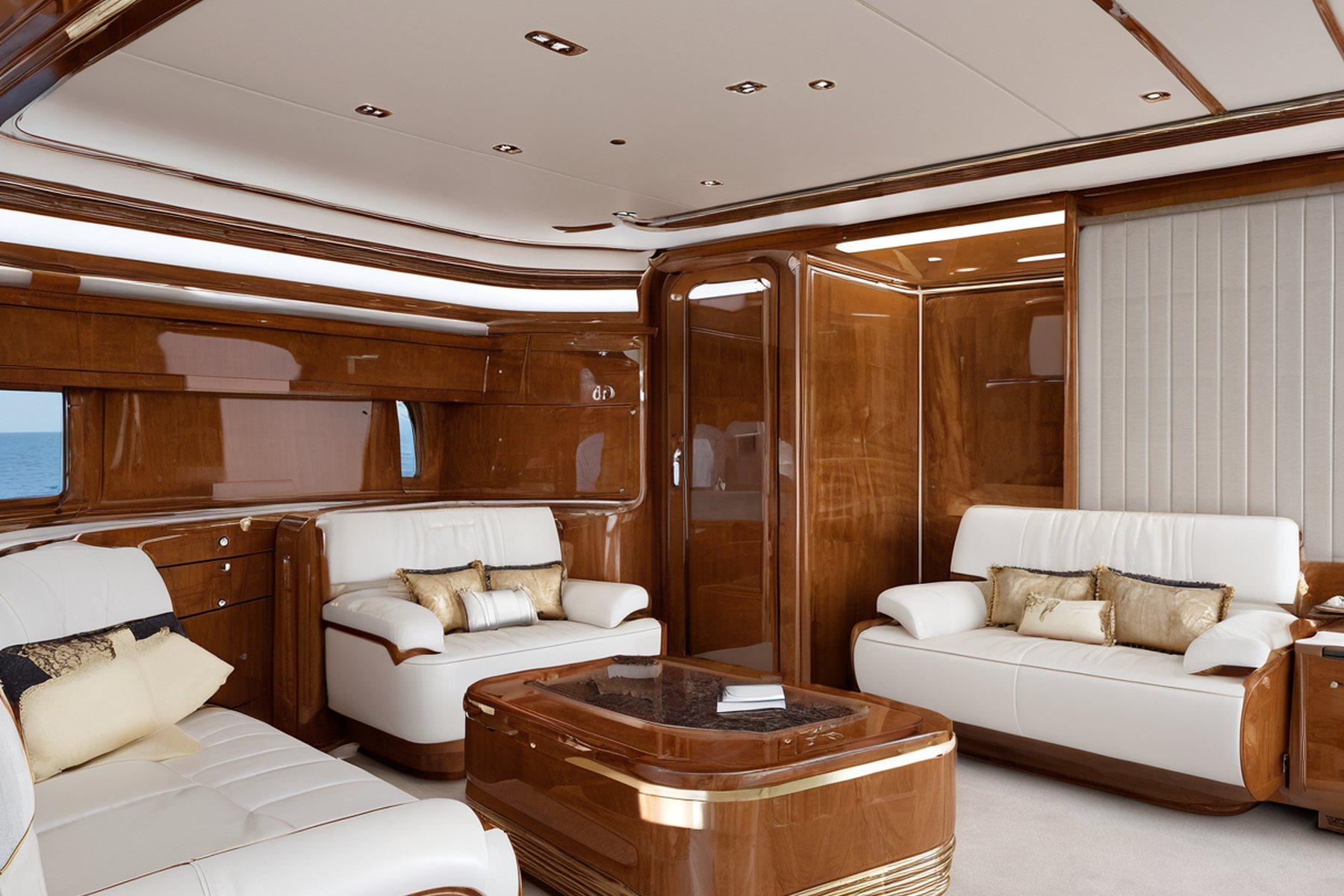
Continue with luxury yacht interior design
See the materials in the two flagship spaces, follow how they are reviewed against class rules, or send a vessel brief to the studio.
Start a yacht interior materials project
Modenese Gastone replies with drawings and a quotation once the room, dimensions, destination country and finish direction are known. The full enquiry form is on the contact page.
Contact the studio